
The UAE has very little arable land and a hot, dry climate, so most of its fresh produce arrives from abroad. Getting it to Dubai's shops, hotels and restaurants depends on trading hubs, temperature-controlled logistics and a national strategy that treats food as a strategic supply chain. This article summarises what the published figures say, and what they mean for suppliers and buyers.
How much of its food does the UAE import?
There is no single official percentage. The United States Department of Agriculture's Foreign Agricultural Service reported in July 2025 that approximately 80 per cent of the UAE's agricultural products are imported, and that total agricultural imports exceeded USD 25 billion in 2024, about 12 per cent more than in 2023. Press and think-tank commentary often gives a higher range, from 80 to 90 per cent, and The National described a figure of nearly 90 per cent in 2022. The sensible reading is that imports account for the large majority of what the country eats, with the exact share depending on the product category and the year.
About 80 per cent of the UAE's agricultural products are imported (USDA Foreign Agricultural Service, July 2025).
Fresh vegetables are a clear example. A 2024 trade analysis based on 2022 data put domestic vegetable production at 300,000 to 350,000 tonnes a year, with self-sufficiency in fresh vegetables below 20 per cent, and negligible fruit production apart from dates.
The National Food Security Strategy 2051
The strategy was announced in 2018, according to The National, and is described on the official UAE portal (u.ae). Its stated goal is for the UAE to rank first in the Global Food Security Index by 2051. The portal lists 38 short and long-term initiatives, a national food basket covering 18 main food types, and a target of three to five supply sources for each major food category. In practice that means diversifying where food comes from, facilitating global food trade and building alternative supply schemes, as well as expanding local production.
For context, the UAE ranked 23rd in the 2022 Global Food Security Index published by Economist Impact, first in the Middle East and North Africa, with a score of 75.2 out of 100, as announced by the Ministry of Climate Change and Environment.
Al Aweer and the Dubai Food District
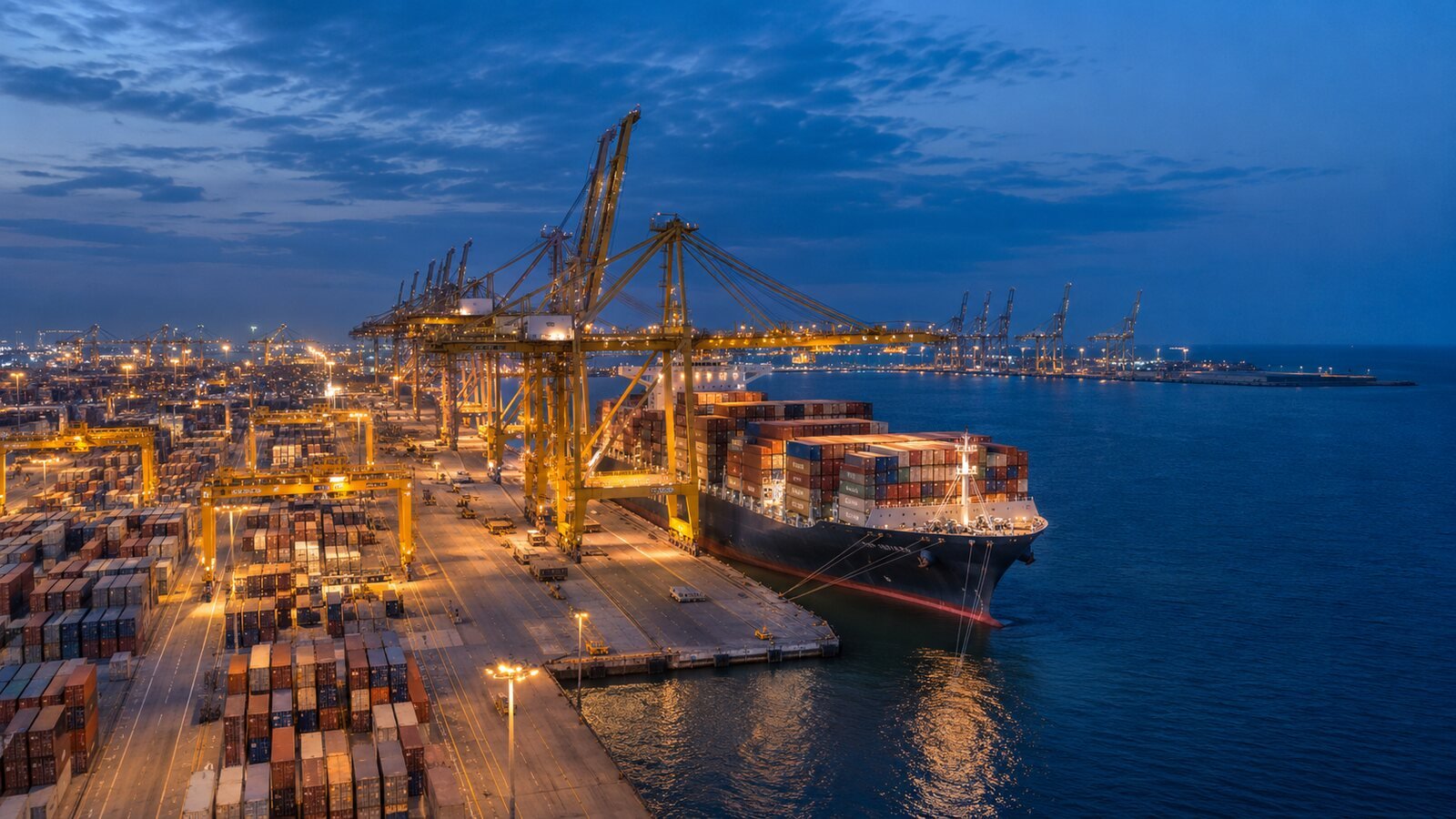
Al Aweer Central Fruit and Vegetable Market opened in 2004 and supports more than 2,500 traders supplying fresh produce across the UAE and the wider region. In January 2026, DP World unveiled plans to expand and rebrand it as the Dubai Food District, a multi-category food trade hub of about 29 million square feet, more than double the existing market. The first phase is scheduled to begin in 2027. Planned facilities include cold stores, temperature-controlled warehousing, processing space and cash-and-carry options, and DP World says the district will link producers and traders to more than 20 international markets.
Nearby, Dubai Municipality opened the Bloom Market in July 2023: a two-storey, air-conditioned market of 66,000 square metres in Ras Al Khor, with 760 traders allotted stalls on the ground floor at opening. We could not find an official annual throughput figure for Al Aweer, so none is quoted here.
Cold chain and logistics
Fresh produce loses quality quickly, so the temperature-controlled chain matters as much as the market itself. A Dubai Municipality project listing describes multi-storey cold stores for fruit and vegetables at Al Awir, with 56 stores and a total capacity of 20,500 tonnes, completed in 2016. Reporting on the Dubai Food District notes growing demand for additional cold storage and re-export facilities, as traders consolidate produce for distribution across the Gulf and beyond.
Re-exports are part of the picture. A 2024 analysis of 2022 data estimated that the UAE re-exports about 1 million tonnes of fresh produce a year, excluding dates, mainly to neighbouring countries, including an estimated 600,000 tonnes to the six Gulf states.
Where fresh produce comes from
Origins vary by product and by year, and the available datasets use different methods, so the figures below should be read as indicative rather than as one ranking.
- By volume in 2022, one trade analysis reported that Iran supplied nearly 1 million tonnes of fresh fruit and vegetables, India 430,000 tonnes (mainly onions), South Africa 340,000 tonnes (mainly citrus and apples), and Egypt and China more than 200,000 tonnes each. Total fresh fruit and vegetable imports exceeded 3 million tonnes, worth about USD 2 billion. The author noted that these figures predate more recent regional shipping disruption.
- By value in 2024, USDA analysis of Trade Data Monitor figures shows fresh fruit imports of about USD 1.19 billion, led by South Africa (27 per cent) and India (13 per cent), and fresh vegetable imports of about USD 597 million, led by China (32 per cent) and India (19 per cent).
Local production: agritech and vertical farming
Domestic production is growing in specific niches. A hydroponic vertical farm near Dubai's Al Maktoum International Airport, announced in July 2022 as a USD 40 million joint venture, covers 330,000 square feet. It was reported to produce more than 1 million kilograms of leafy greens a year using about 95 per cent less water than conventional farming. Such sites mainly supply leafy greens and herbs rather than staple crops, and they are energy intensive.
At national level, the Plant the Emirates programme, launched in October 2024, set five-year targets that include a 20 per cent increase in farm production, a 30 per cent increase in farms adopting climate-smart solutions and a 50 per cent reduction in agricultural production waste. These are policy targets, not results.
What it means for suppliers and buyers
- Diversified sourcing is policy. With a stated aim of several supply sources per major food category, buyers are likely to keep comparing origins, and suppliers should expect that comparison.
- Quality and cold chain continuity are commercial terms. Specify temperature ranges, packing, transit time and who bears risk at each handover, ideally using agreed Incoterms rules.
- Routes and timing carry risk. Because most food is imported, shipping disruption quickly affects availability and price. Contracts that anticipate delays, substitution of origin and inspection on arrival reduce disputes.
- Hubs favour consolidation. Al Aweer and the planned Dubai Food District are built for aggregation and re-export, which suits suppliers able to serve several markets from one point.
- Local supply complements, not replaces, imports. Domestic farms are strongest in leafy greens and some vegetables; fruit remains overwhelmingly imported.
Le Portail Commercial and fresh produce
Fresh Fruit & Vegetable Trading is one of the five divisions of Le Portail Commercial, covering global sourcing and distribution of fresh produce. To learn more, see our fresh produce division or get in touch.
This article is general information only and is not legal, regulatory or investment advice. Readers should confirm requirements and figures with the relevant UAE authority or a qualified adviser before making decisions.
Sources
- US Department of Agriculture, Foreign Agricultural Service (GAIN): Exporter Guide Annual, United Arab Emirates, TC2025-0005, 3 July 2025 (accessed November 2026)
- UAE Government portal (u.ae): National Food Security Strategy 2051 (accessed November 2026)
- Gulf News: UAE tops MENA region in Global Food Security Index 2022 (accessed November 2026)
- Dubai Media Office: DP World announces Dubai Food District (accessed November 2026)
- Khaleej Times: Dubai Food District to expand existing fruit and vegetable market to over double its size (accessed November 2026)
- Gulf News: Inside Dubai's all-new Bloom Market (accessed November 2026)
- Dubai Municipality: Cold Stores project at Al Awir (accessed November 2026)
- FreshPlaza: Gulf states imports grow, United Arab Emirates becomes a hub (accessed November 2026)
- The National: Emirates Flight Catering unit opens world's biggest vertical farm in Dubai (accessed November 2026)
- The National: Sheikh Mohammed announces Plant the Emirates project (accessed November 2026)
- The National: The UAE's food security strategy has made it a global market player (accessed November 2026)